Freight brokerage foundation
Understand the broker role, the freight market, stakeholders, and daily operating responsibilities.
Learn freight brokerage as an operating system: compliance, customers, carriers, pricing, documentation, technology, risk, and day-to-day execution.
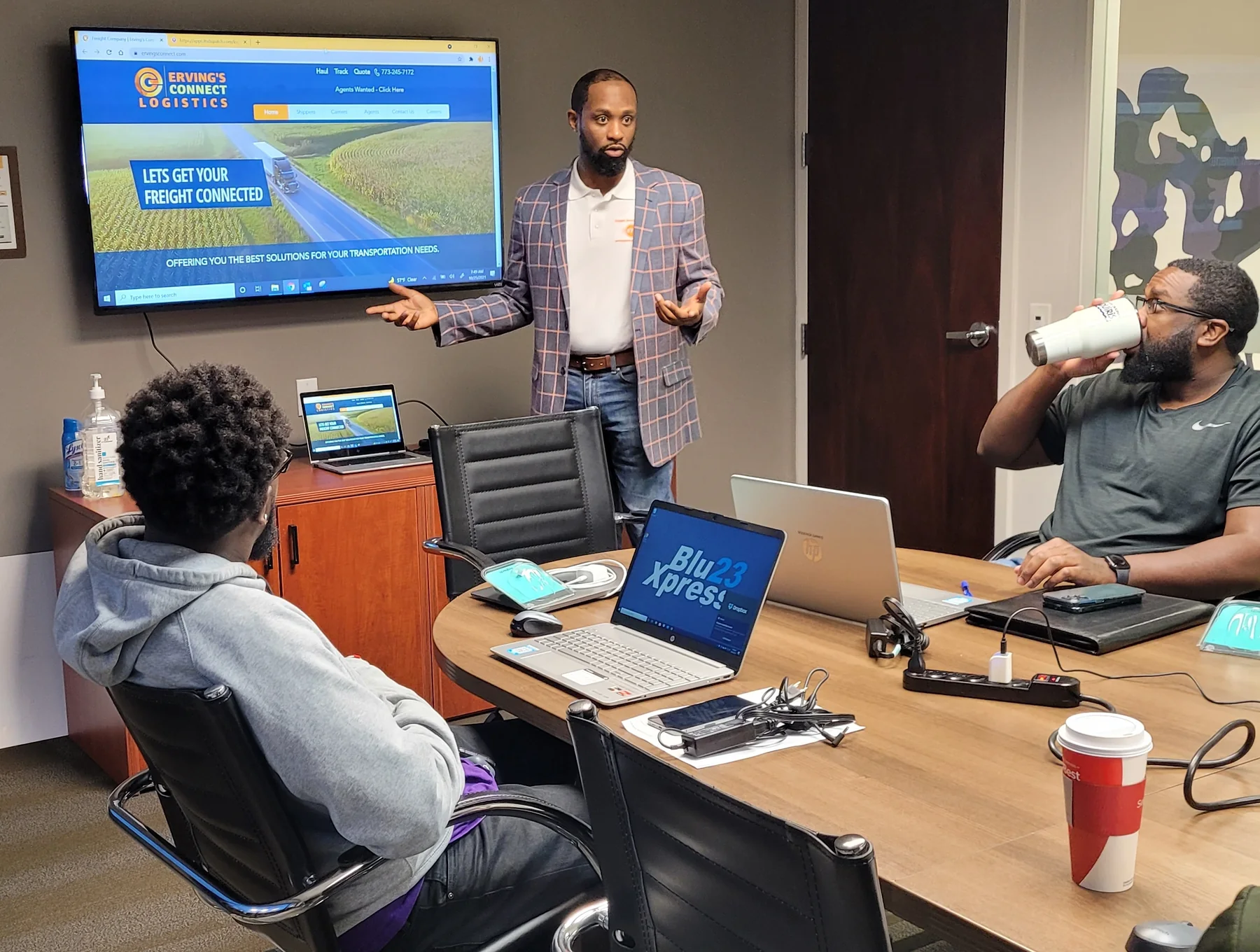
The goal is to understand the entire transaction—not just finding a load. That means knowing how to win shipper business, source carriers, document the shipment, manage risk, communicate, and close the billing cycle.
Organized around the decisions, documents, workflows, and operating knowledge you will actually use.
Understand the broker role, the freight market, stakeholders, and daily operating responsibilities.
Learn the federal setup framework, broker authority, BOC-3, UCR, bond/trust concepts, and compliance responsibilities.
Understand equipment types, transportation modes, spot and contract freight, and the factors that influence pricing.
Prospect shippers, develop a value proposition, quote freight, negotiate terms, and build a professional brand.
Identify, vet, onboard, and maintain productive carrier relationships.
Work through shipper and carrier packets, rate confirmations, bills of lading, PODs, invoices, and operating workflows.
Understand TMS, load boards, tracking, and the basic technology stack used in brokerage operations.
Build practices around carrier vetting, claims, disputes, double-brokering risk, and compliance.
Understand freight classification, density, CWT concepts, and LTL-specific workflows.
Track trends, refine processes, develop a team, and plan for controlled growth.
Connect prospecting, quoting, carrier sourcing, setup, tracking, documentation, and billing into one process.
Select an option below to review it on our new checkout page. Live online payment processing is not enabled yet; you can request purchase details without being charged.
Core freight broker training.
Full curriculum with ongoing access.
Expanded training plus coaching and supporting courses.
Course details can change as training is updated. Confirm current access terms during checkout.
No. A freight broker arranges transportation between shippers and authorized carriers rather than operating the carrier equipment.
It explains the core setup and compliance framework. Always confirm current federal and state requirements before operating.
Current course options include a certificate of completion after required coursework is completed.
Use the course to organize what you know, see what you are missing, and move into implementation.